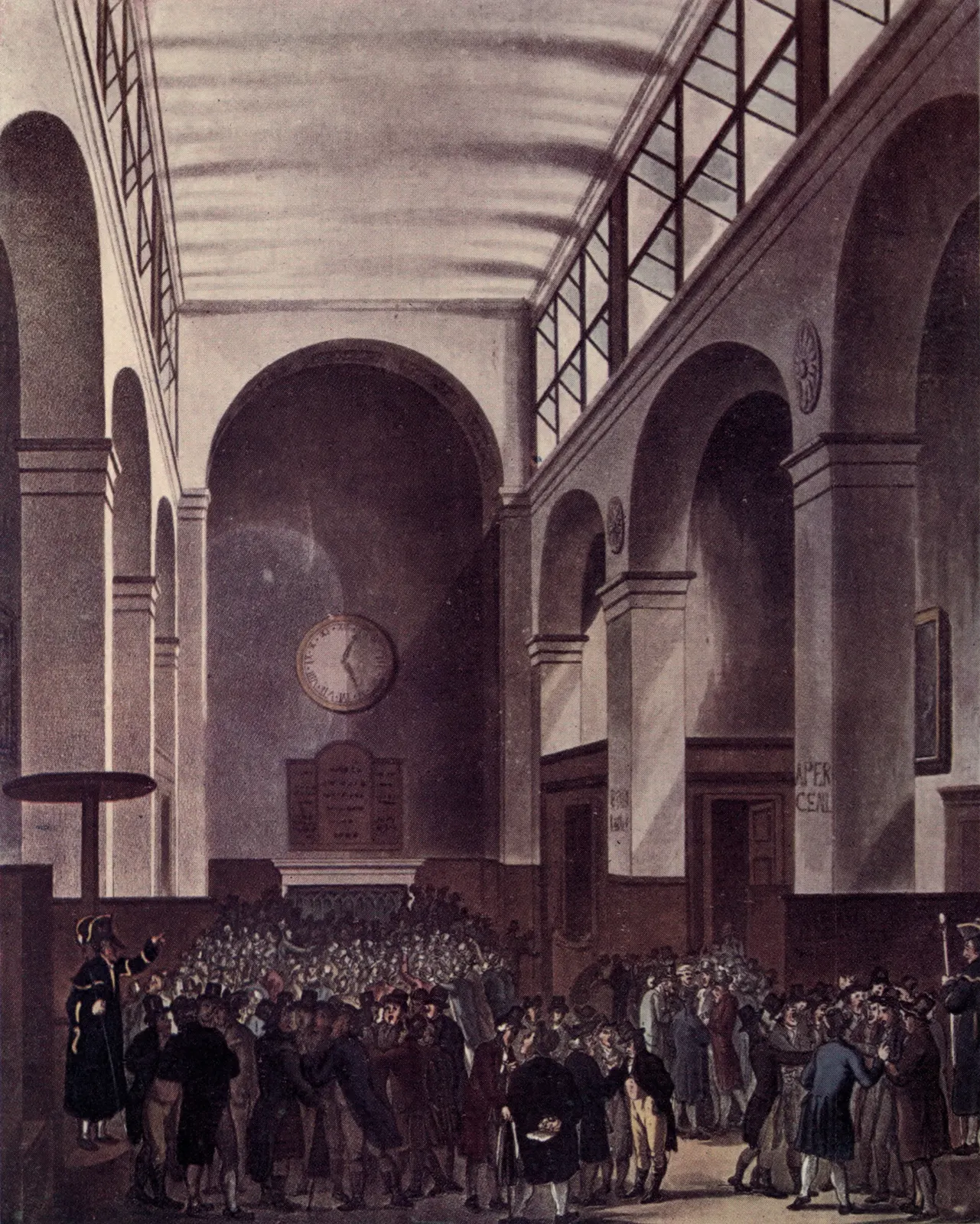
In 1762, a trading house opens its doors in London. It will become one of the most prestigious banks in the world. It finances Britain's wars, its railways and, in 1803, alongside Hope & Co. of Amsterdam, the young United States' purchase of Louisiana. Its name is Barings.
Two hundred and thirty-three years later, in February 1995, it is declared insolvent.
A trader in Singapore
Nick Leeson arrives in Singapore in 1992 to work for Barings Futures. He is twenty-five. He trades futures on Japan's Nikkei index, and he makes the bank money. A lot of it, on paper.
He has one peculiarity that should have alarmed everyone: he runs both the trading desk and the back office that records and checks the trades. He is the only one checking his own work.
Account 88888
In 1992, Leeson opens an error account numbered 88888 — eight is a lucky number in Chinese culture. An error account normally exists to park small booking mistakes. He uses it to hide his losses.
The pattern never changes. A position loses. Instead of reporting it, he moves it into account 88888. Then he doubles up to win it back. When that isn't enough, he doubles again.
In London, head office only sees the reported profits. And it keeps wiring the funds he asks for to meet his margin calls.
The earthquake
On 17 January 1995, an earthquake strikes Kobe, Japan. The Nikkei falls. Leeson, heavily positioned for a rise, does what he has always done: he buys more, convinced the market will bounce. It doesn't.
On 23 February, he leaves Singapore. Within days, Barings discovers the scale of the damage.
Sold for one pound
On 26 February 1995, the Bank of England gives up on a rescue. Barings goes into administration and is bought by the Dutch group ING for one pound sterling. Leeson is arrested in Germany, extradited and sentenced to six and a half years in prison in Singapore.
What the story teaches
People remember the amount. The lesson is elsewhere, and it applies to every trader, whatever the size of the account.
It is almost never the first loss that kills you. It is refusing to accept it.
Leeson's first loss was modest. What made it fatal was the decision to hide it, then to double down to erase it. Every doubling raised the size of the next loss.
Three habits follow from it:
- Set your maximum loss before you enter, not during the trade.
- Never add to a losing position to "win it back". That is exactly the account 88888 pattern.
- Don't be your own auditor. An honest trading journal, reread with a cool head, plays the role of the back office that was missing in Singapore.
Margin trading carries a high risk of losing your capital, and cashback does not reduce that risk. RendR is not an investment adviser, manages no capital on behalf of its users, and never holds an account’s trading password. Cashback depends on the agreements reached with each partner broker.
Read the full risk warning