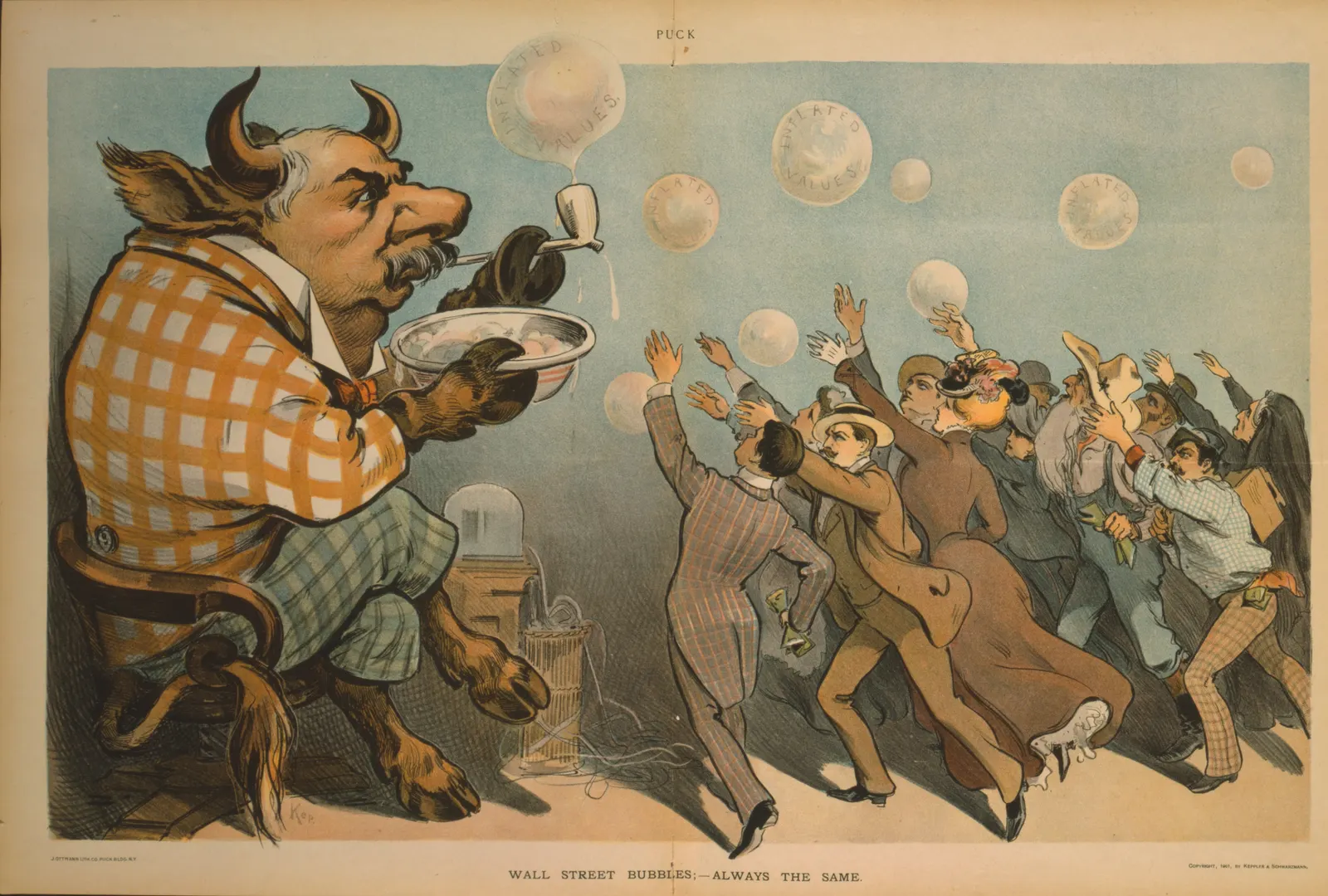
You have probably lived this scene. A position moves your way: you close it quickly, relieved to have locked in the gain. Another moves against you: you wait. It will come back. You just need to be patient.
That behaviour isn't a personality trait. It is one of the best-documented biases in behavioural finance.
A loss weighs more than a gain
In 1979, psychologists Daniel Kahneman and Amos Tversky publish prospect theory. It shows that we don't judge an outcome in absolute terms but relative to a reference point, and that losses and gains don't carry the same weight.
Losing a hundred euros hurts about twice as much as winning a hundred euros feels good. This imbalance, called loss aversion, explains a great many trading decisions on its own.
The disposition effect
In 1985, economists Hersh Shefrin and Meir Statman give a name to its consequence in markets: the disposition effect. Investors tend to:
- sell too early the positions that are winning, to "lock in" the pleasure of the gain;
- hold too long the positions that are losing, because selling would mean admitting the mistake.
As long as the position is open, the loss stays "unrealised". We tell ourselves it isn't real. Closing the position makes it final.
What the bias costs
In 1998, economist Terrance Odean studies thousands of retail accounts at a US broker. The finding is clear: investors realise gains far more readily than losses. And the winners they sell go on to do better than the losers they keep.
In other words, the portfolio empties itself of its best positions and fills up with its worst.
Why it's worse with leverage
On a leveraged account, holding a loss in the hope it comes back doesn't just cost money. It ties up margin, sometimes costs a swap every night, and exposes you to a margin call if the market keeps going the wrong way. It is exactly the pattern that sank Barings Bank, on another scale.
The fix: decide before
The solution is anything but spectacular. It takes the exit decision away from the moment when emotion runs highest.
- Before entering, write down your stop-loss level and your profit target.
- Place the matching orders as soon as the position is open.
- Only ever move them one way: the way that reduces risk, never the way that increases it.
- Review your journal every month: count the positions you cut before their target and the ones you held past their stop.
The plan is made before you enter. Not during.
Margin trading carries a high risk of losing your capital, and cashback does not reduce that risk. RendR is not an investment adviser, manages no capital on behalf of its users, and never holds an account’s trading password. Cashback depends on the agreements reached with each partner broker.
Read the full risk warning